
How to Sell Art at Craft Fairs and Markets
6 min read
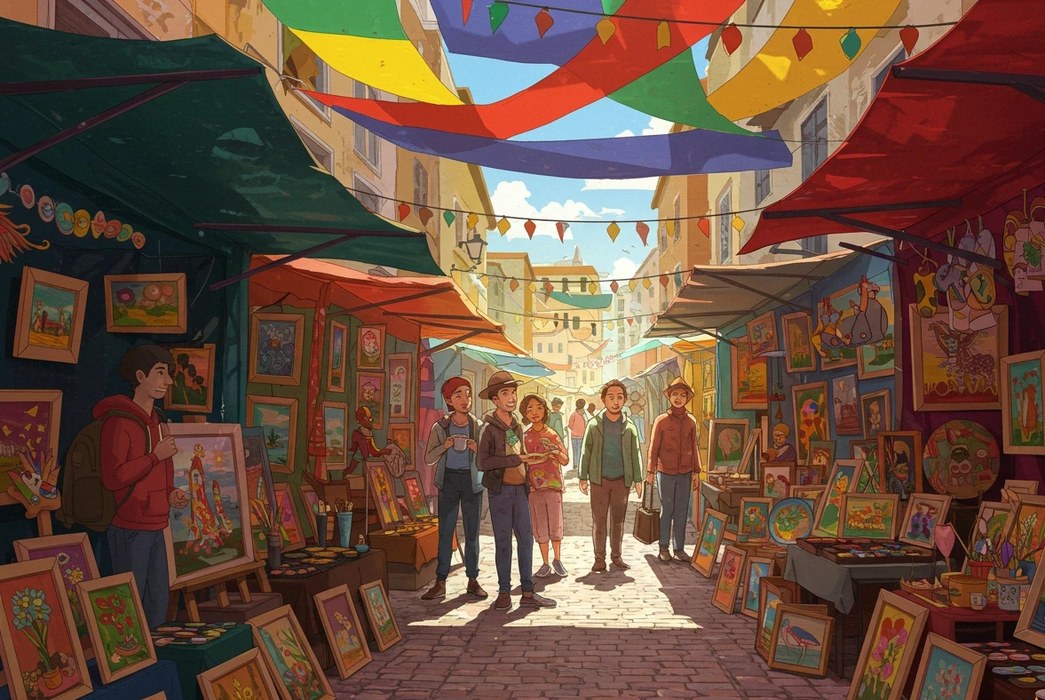
Most artists wait for gallery representation before they start selling. That's a mistake.
Craft fairs and local markets are where real sales happen — direct to buyers who are standing in front of your work, wallet in hand. No waiting for gallery approval. No split commissions. No middleman between you and the person who loves your art.
But a great booth and great work aren't enough on their own. The artists who consistently do well at markets come prepared: inventory tracked, pricing printed, collector contacts captured. This guide covers all of it.
Choosing the Right Markets for Your Work
Not every market is a fit. A fine art oil painter and a ceramic jewelry maker will perform very differently at the same event. Before you commit to booth fees, do your homework.
Questions to ask before applying:
- What's the typical buyer demographic? (Students browsing vs. homeowners buying)
- What are price points like for similar work? (A $600 painting needs a different market than $20 prints)
- What's the booth fee vs. average vendor revenue? Ask past vendors.
- Is there a juried application? (Good sign — juried markets filter for quality and tend to attract more serious buyers)
- Indoor or outdoor? (Outdoor events mean weather risk and different display requirements)
Good starting points:
- Local farmers markets with a dedicated art section
- Juried craft fairs at community centers, parks, and arts organizations
- Holiday markets (November–December are peak selling season)
- Museum and gallery gift fair weekends
- University arts walks
Start local, low-stakes, and affordable. You'll learn more from one real market day than hours of research.
What to Bring: The Pre-Market Checklist
Forgetting something at a market is costly — you usually can't leave to get it. Build a packing list and check it the night before.
Display:
- Gridwall panels, pegboard, or tabletop easels
- Table covers (floor-length looks professional)
- Price tags or printed price sheets
- Business cards and/or a QR code sign linking to your portfolio
- A small framed artist statement or bio
Inventory:
- More work than you think you'll need — empty wall space kills sales
- A mix of price points (prints, originals, smaller pieces)
- Packaging: tissue paper, flat bags or tubes, branded stickers
Operations:
- Square, Stripe Terminal, or another card reader (card-only buyers are common)
- Cash box with change (not everyone has a card)
- Printed receipt book for cash sales
- Phone charger/power bank
- Water, snacks — you may be on your feet for 8 hours
Pricing Your Booth for Profit
A common mistake: pricing to compete with your booth neighbors instead of pricing for your actual costs.
Work backwards:
- What did you spend making the work? (Materials + time at a reasonable hourly rate)
- What's your booth fee?
- Add it up. That's your break-even point before you make a dollar.
Then add your margin. If you're selling originals, price them consistently with your portfolio and gallery pricing — don't drop prices at markets. Undercutting yourself trains buyers to wait for you at fairs rather than buying through your site.
For prints: Markets are one of the best places to move prints. Price small prints ($20–$60) as affordable entry points and use them to introduce buyers to your originals.
The Day Of: Running Your Booth
First hour: Arrive early. Set up fully before the market opens. Buyers who arrive at opening are often the most serious.
Engagement without pressure: Make eye contact, say hello, and let people browse. The worst thing you can do is hover silently while staring at someone looking at your work. Give them space, then offer context when they engage — "That one's from a series I did in New Mexico."
Capture contacts: Anyone who expresses real interest but doesn't buy is a warm lead. Have a simple sign-up sheet or tablet ready: "Join my collector list for new releases and studio updates." Don't let that conversation walk away.
Log every sale: Whether cash or card, record it. What sold, at what price, to whom (if you get a name/email). This data is gold for future planning.
After the Market: The Follow-Up That Most Artists Skip
The sale doesn't end when the market closes. What you do in the 48 hours after determines whether a one-time buyer becomes a repeat collector.
- Send a thank-you to anyone who gave you contact info — even a brief "Thanks for stopping by, here's a link to my full portfolio"
- Update your inventory — mark sold pieces, note what moved and what didn't
- Review what sold: Which pieces got the most attention? Which price points moved? Use this to plan future work
How Fine Art Form Helps on Market Day
Spreadsheets and memory don't cut it when you're managing a busy booth. Fine Art Form gives you a system that works before, during, and after the market.
Before:
- Tag your market pieces as available in your inventory — you'll know exactly what you're bringing and at what price
- Print QR code labels for each piece — buyers scan to see full details and your portfolio
During:
- Log each sale directly in Fine Art Form as it happens — inventory updates automatically
- Capture buyer info in Contacts — name, email, what they bought
After:
- Your sales log reflects the day accurately — no manual reconciliation
- Contacts from the market become the start of your collector email list
The artists who build sustainable market businesses aren't just good at making work — they're good at the business side. Fine Art Form handles the back-office so you can focus on the conversation in front of you.
One Last Thing
The first market is always the hardest. The setup is slower, the pricing feels uncertain, the engagement is awkward. That's normal.
Show up again. Every market teaches you something. After three or four events, you'll have a system, a booth that actually sells, and a growing list of collectors who found you in person and will buy from you for years.
That's how sustainable art careers start — not in galleries, but at a table in a park on a Saturday morning.