
How to Use Video to Market Your Art and Build Your Audience
6 min read
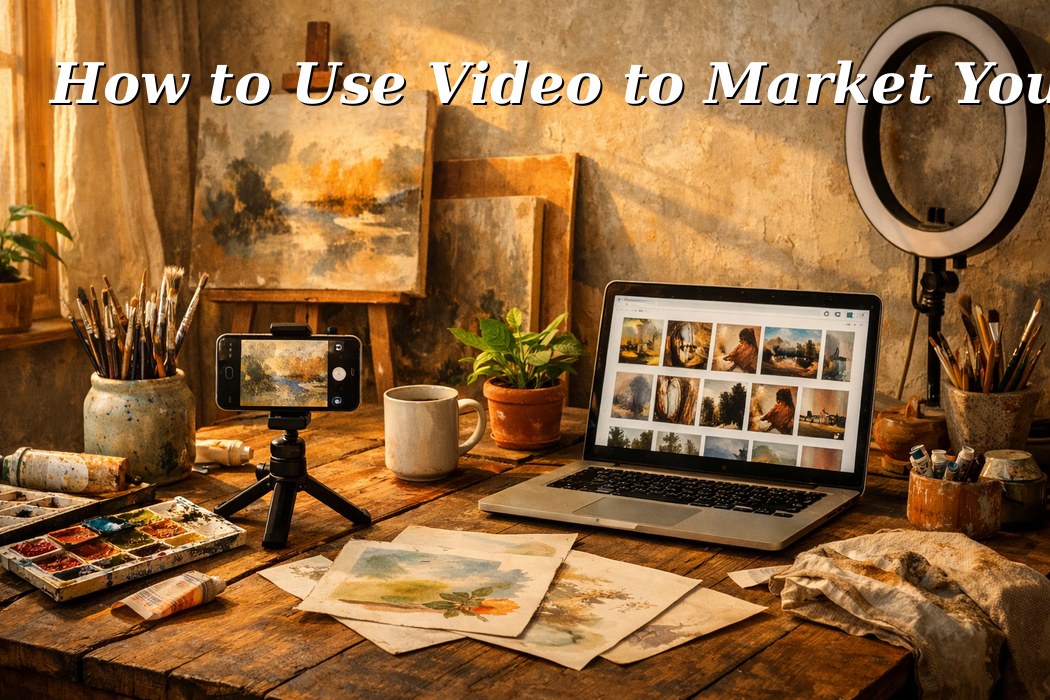
Video is the fastest way for an artist to build a real audience online — faster than posts, faster than newsletters, faster than anything else. Why? Because video shows your process. It shows your hands moving, your decisions happening, your personality. Collectors who watch you work feel like they know you before they ever buy from you.
You don't need a film crew. You don't need perfect lighting or a ring light setup. You need your phone, something interesting to film, and five minutes a day. Here's how to make it work.
Why Video Works for Artists
Most artist marketing is static — a finished painting on a white background, a bio nobody reads. Video breaks through because it answers the question every collector has: how did you make that?
Process videos are consistently the highest-performing content for artists on every major platform. They attract:
- New followers who discover you through algorithm recommendations
- Collectors on the fence who finally commit after seeing your process
- Press and gallery interest — curators watch Instagram Reels too
- Commission inquiries — nothing sells custom work like showing how good your custom work is
The bar is low. Authenticity beats production quality every time.
What to Film: 6 Types of Content That Work
1. Process videos (highest impact) Film yourself painting, sculpting, printmaking, or working in your medium. Even 30 seconds of hands-on work is compelling. Start after your initial sketch or underpainting — when the visual changes come fast.
2. Studio tours Walk through your space. Show your tools, your storage, your organization. Collectors love seeing where the work happens.
3. Before and after Film the blank canvas, then cut to the finished work. Simple, satisfying, always performs well.
4. Work in progress updates For larger pieces or commissions, document the stages. This is especially valuable if you're sharing the piece's journey in your newsletter or with a collector.
5. Packing and shipping Film yourself wrapping a painting for shipping. It shows care, craftsmanship, and reassures buyers about how you'll handle their purchase.
6. Q&A and behind-the-scenes Answer the questions you get asked most — "how long does a painting take?", "where do you get your ideas?", "what materials do you use?" — on camera. Casual is fine.
Where to Post Your Videos
Instagram Reels — Still the best discovery tool for artists. Short (15–60 seconds), vertical, with trending audio. Post 2–3x per week if you can.
TikTok — Enormous artist community. Same short-form format. A single process video can get tens of thousands of views. Don't overthink it.
YouTube — Long-form home. Great for detailed tutorials, studio tours, and longer process videos (5–20 minutes). Builds slowly but compounds well over time.
Pinterest — Often overlooked, but video pins get excellent reach for art-adjacent searches. Worth the extra minute to cross-post.
Your Fine Art Form portfolio — Embed video links in artwork descriptions or your bio. Collectors who land on your portfolio can see you in action immediately.
The Minimal Setup That Works
You genuinely don't need much:
- Your smartphone — Modern phones shoot beautiful video. Use the rear camera.
- Natural light — Position yourself near a window. It's free and it's flattering.
- A phone stand or clamp — A $15 clamp mount on your easel or desk changes everything. Frees your hands, stabilizes the shot.
- Vertical orientation — Shoot vertically (9:16) for Reels and TikTok. You can always crop to square or horizontal later.
- CapCut or InShot — Free mobile apps for basic editing, captions, and music. Takes 5 minutes once you know them.
That's it. Anything beyond this is optional.
Audio: The Part Most Artists Get Wrong
Bad audio ruins good video. Good audio saves mediocre video.
- Trending music drives reach on Reels and TikTok — use the platform's built-in audio library, not your own music files
- No talking? No problem — process videos with just music perform extremely well
- If you're talking, use a simple clip-on lavalier mic (~$20). The built-in phone mic picks up too much room noise.
- Captions — Always add them. Most people watch with sound off. Both Instagram and TikTok will auto-generate them; clean them up before posting.
Connecting Video to Your Fine Art Form Portfolio
Video should always point somewhere. Make it easy for viewers to go from watching to buying:
- Bio link — Your Fine Art Form portfolio URL goes in your bio on every platform. Keep it there always.
- Artwork mentions — When you post a process video of a piece, note in the caption when it's available and link in bio.
- "Enquire" CTA — End videos with a simple call to action: "Commission info in bio" or "Original available — link in bio."
- Stories and pinned posts — Pin your best-performing video to your profile. New visitors should see it first.
Fine Art Form makes this seamless — your portfolio always has current inventory, pricing, and a contact form. You just need to drive people to it.
Building a Simple Content Rhythm
Consistency matters more than perfection. A realistic schedule for a working artist:
| Frequency | What to post |
|---|---|
| 2–3x/week | Short Reels/TikToks (15–60 sec process clips) |
| 1x/week | A longer-form piece (studio tour, Q&A, detailed process) |
| As needed | Commission reveals, new work announcements, art fair updates |
Batch when you can. Film 3–4 clips in one session, then spread them out across the week. You don't need to film every day.
Measuring What's Working
Don't obsess over follower count. Track these instead:
- Profile visits — Are viewers clicking through to learn more?
- Bio link clicks — Are they visiting your portfolio?
- Saves — High saves = content people find valuable enough to return to
- DMs and inquiries — The real metric. Is video generating collector conversations?
After a month, look at your top 3 performing videos. Make more content like those.
Common Mistakes to Avoid
Waiting until you're "ready" — There is no ready. Post the imperfect video now.
Only posting finished work — Process outperforms product shots consistently. Show the mess.
Ignoring comments — Reply to everyone in the first hour after posting. It signals to the algorithm that your content drives engagement.
Deleting posts that underperform — Every account has flops. Leave them up. One video going quiet doesn't mean your next one will.
Using watermarks from other platforms — TikTok's watermark suppresses reach on Reels. Download without watermark (SnapTik or similar) before cross-posting.
Getting Started This Week
Pick one thing and do it:
- Film 60 seconds of your process next time you sit down to work. Don't overthink it. Post it.
- Set up your bio link on every platform pointing to your Fine Art Form portfolio.
- Watch the comments for a week. Pay attention to what people respond to.
That's your video strategy. Start there. Refine as you go.
Quick Recap
- Process videos are your highest-value content — show the work being made
- Instagram Reels and TikTok have the best discovery reach for artists right now
- You need your phone, a window, and a $15 clamp — nothing else is required
- Always link back to your Fine Art Form portfolio in your bio
- Consistency beats perfection; 3 real videos a week beats one polished video a month
- Track profile visits, link clicks, and DMs — not just follower count
Video is the shortest path from stranger to collector. Start filming.